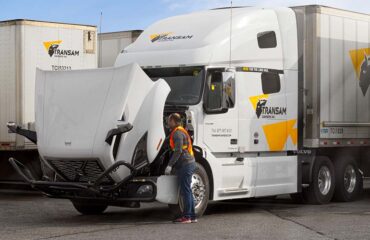



The trucking industry is entering 2026 at a critical crossroads. After years shaped by supply chain disruptions, shifting demand, inflationary pressures, and evolving trade patterns, both carriers and shippers are approaching the future with cautious optimism. While market conditions show signs of stabilization, uncertainty remains.
For businesses that depend on reliable freight movement, understanding where the industry is heading is now a strategic necessity. Decisions around transportation partnerships, capacity planning, and logistics strategy made today will directly influence competitiveness in the years ahead.
As a carrier operating across Canada and the United States, we closely follow the economic signals, industry developments, and policy discussions shaping freight transportation. This outlook highlights what shippers and logistics professionals should expect as trucking moves into 2026 – including market conditions, challenges, and emerging opportunities.
Economic and Market Outlook
Heading into 2026, the freight transportation outlook can be described as neutral but fragile. Economic indicators point to steady demand rather than rapid growth, with freight volumes closely tied to performance in manufacturing, retail, and cross-border trade.
After a prolonged soft cycle, freight markets in Canada and the U.S. have shown modest signs of improvement, driven in part by inventory restocking and seasonal demand. However, recovery remains uneven, varying by region, lane, and freight type.
Although inflation has cooled, cost pressures persist. Fuel, labor, insurance, and compliance expenses continue to affect carrier operations. For shippers, this suggests greater pricing stability than in recent years, but meaningful rate reductions are unlikely.
Trade policy and geopolitical uncertainty also remain influential. Tariff changes, evolving trade agreements, and global economic shifts continue to impact cross-border freight flows. As a result, many businesses are taking a cautious approach – prioritizing reliability, visibility, and long-term partnerships over short-term cost savings.
Overall, forecasts for 2026 point to measured growth rather than a sharp rebound, with resilience depending on how effectively carriers and shippers adapt to ongoing uncertainty.
Industry Conditions and Key Challenges
Despite signs of stabilization, several structural challenges continue to shape the trucking industry’s outlook for 2026.
Profitability remains a key concern for carriers. Extended periods of soft freight rates have limited margins, reducing fleets’ ability to invest aggressively in new equipment or technology. Many carriers are responding by delaying expansion and focusing on efficiency and cost control.
Capacity dynamics remain complex. While excess capacity has weighed on rates in some markets, demand surges – whether seasonal or disruption-driven – can quickly tighten availability. This reinforces the importance of dependable carrier relationships, particularly for time-sensitive freight.
Regulatory uncertainty also influences long-term planning. Emissions standards, environmental policies, and evolving compliance requirements in both Canada and the U.S. continue to shape fleet decisions. While sustainability initiatives are gaining momentum, the pace and cost of adoption remain key concerns.
Market volatility has become the norm. Fluctuating spot rates, shifting shipper behavior, and unpredictable global events demand flexibility from both carriers and customers.
Capacity and Equipment Outlook
Now that 2026 has arrived, capacity management and equipment investment remain central concerns. Following years of volatile demand and compressed margins, many carriers have adopted a cautious approach to fleet growth. New truck orders have slowed, and replacement cycles have been extended.
While this restraint supports short-term stability, prolonged underinvestment could tighten capacity when demand rebounds or during peak seasons. For shippers, this highlights the value of securing reliable capacity in advance, particularly for high-volume or time-sensitive freight.
Equipment planning continues to be shaped by regulatory and cost pressures. Emissions standards and uncertainty around zero-emission mandates complicate long-term decisions. Although alternative-fuel and electric trucks are gaining attention, adoption remains limited due to infrastructure gaps, higher upfront costs, and long-haul operational constraints.
In the near term, most fleets are expected to prioritize maintenance, utilization, and efficiency over expansion – a practical strategy that leaves limited room for error during demand spikes.
Workforce and Driver Trends
Workforce dynamics remain one of the most influential factors shaping the industry’s future. The driver shortage, while fluctuating, continues to be a long-term structural issue across North America.
In Canada, industry groups continue to emphasize the need for new drivers to sustain freight movement. While training programs and immigration pathways have helped ease pressure, demand for qualified drivers still outpaces supply, particularly for long-haul and cross-border routes.
Retention has become as important as recruitment. Carriers are placing greater emphasis on driver well-being, predictable schedules, modern equipment, and supportive work environments. These efforts improve job satisfaction while enhancing safety and service reliability.
From a shipper’s perspective, workforce stability matters. Carriers with low driver turnover are better positioned to deliver consistent service and manage complex lanes effectively.
Technology, Innovation, and the Road Ahead
Technology continues to reshape trucking operations and shipper expectations. By 2026, digital tools will play an even larger role in improving visibility, efficiency, and decision-making.
Transportation Management Systems, real-time tracking, and data-driven routing are becoming standard. These tools reduce empty miles, improve delivery accuracy, and provide greater transparency throughout the shipping process.
Automation and artificial intelligence are also gaining traction, particularly in dispatch optimization, predictive maintenance, and forecasting. While fully autonomous trucking remains a longer-term prospect, incremental advancements such as driver-assist and safety technologies are already delivering operational benefits.
Sustainability is another growing focus. Customers and regulators are paying closer attention to emissions and fuel efficiency. While large-scale transformation will take time, carriers that begin adapting now will be better positioned for future expectations. Technology will not replace relationships – but it will strengthen them.
Strategic Lanes and Corridor Considerations
Not all freight lanes will experience the same conditions heading into 2026. Certain corridors remain especially important due to trade flows, manufacturing activity, and regional demand.
Canada–U.S. cross-border routes continue to play a central role. The Midwest remains a critical manufacturing hub, while Northeastern U.S. lanes support dense consumer markets and strong seasonal demand. Western Canada remains strategically significant for agricultural, industrial, and interprovincial freight, despite sensitivity to fuel costs and weather disruptions.
For shippers, lane-specific planning will be increasingly important. Capacity, transit reliability, and border efficiency can vary widely by region and season. Working with carriers that understand and operate consistently within these corridors reduces risk and improves long-term outcomes.
What Shippers Should Consider Heading into 2026
As businesses prepare their logistics strategies for 2026, several priorities stand out.
Capacity planning should remain proactive. Even when rates appear stable, unexpected disruptions can quickly change conditions. Building dependable carrier relationships offers greater security than relying solely on spot capacity.
Flexibility is equally important. Balancing contract freight with adaptable solutions such as LTL or multi-stop options helps shippers respond to changing volumes.
Visibility and communication remain critical. Clear tracking, consistent updates, and responsive coordination prevent small issues from becoming costly disruptions. Shippers should view carriers as strategic partners, collaborating on planning, forecasting, and lane optimization.
Conclusion: Preparing for the Road Ahead
The trucking outlook for 2026 is defined by balance. While challenges remain – from cost pressures to workforce constraints – the industry is moving toward greater stability and resilience.
For shippers, success will depend on thoughtful planning, strong partnerships, and a clear understanding of market dynamics. For carriers, reliability, flexibility, and operational excellence will continue to set leaders apart.
Transportation remains the backbone of commerce. Businesses that invest in dependable freight solutions today will be better positioned to navigate tomorrow – mile by mile, shipment by shipment.
Reference & Insights Sources
This outlook is informed by a review of recent industry reporting, economic commentary, and market analysis from trusted transportation and logistics organizations. Key insights were drawn from:
- TruckNews (Canada) – Industry news, economic trends, fleet operations, and market conditions affecting Canadian and cross-border trucking.
- Canadian Trucking Alliance (CTA) – Policy updates, workforce trends, regulatory developments, and national industry perspectives.
- Ontario Trucking Association (OTA) – Regional insights into workforce challenges, compliance, and market dynamics in Ontario.
- North American freight and logistics reports – Including market outlooks on capacity, rates, and equipment investment.
- Industry research and analysis firms – Providing data-driven perspectives on freight demand, carrier profitability, and long-term trends.
To learn more about Transam Carriers’ transportation services, please visit our page:
https://www.staging.transam.dev/services
Quick quote: https://www.staging.transam.dev/quick-quote
Email: info@transamcarriers.com
Tel. 416-907-8101
For career opportunities at Transam Carriers, visit our Careers page or email us: hr@transamcarriers.com